|
|
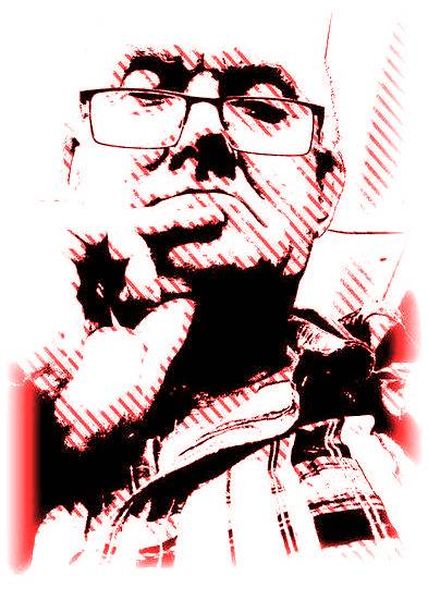
Philip CzapłowskiCzapłowski was born in London. His father was Polish, born to a peasant family in the village of Kijonij (now Kijonys, Lithuania). Philip's mother was British, born in Marylebone of Irish, Cornish and Scottish ancestry. In 1969 the Czapłowski family migrated to Australia. After arriving in Melbourne Philip studied piano with William L (Bill) Lowe (1970 to 1975), and composition with Felix Werder (1975 to 1977). Czapłowski subsequently studied music at Melbourne and La Trobe Universities, where his composition teachers included Peter Tahourdin, Ted Dollarhide, and Keith Humble, as well as piano with Rodney Sigston. In 2007 Czapłowski completed a Doctorate in music composition at Monash University (under the supervision of Thomas Reiner), where he also lectured in music theory (Schenkerian analysis). In 2005 Czapłowski attended the Krzystof Penderecki Academy of Music in Kraków, Poland, where he worked with Marcel Chyrzyński, Zbigniew Bujarski, Krystyna Moszumañska-Nazar, Wojciech Widłak, and Anna Zawadska-Gołosz. Philip Czapłowski's compositions include the orchestral work Momentum, commissioned by the Melbourne Symphony Orchestra in 2000, four concertos written for Australia Pro Arte (now the Melbourne Chamber Orchestra), and numerous chamber and solo compositions. His music has been performed and recorded around the world, and he is a represented artist in the collection of the Australian Music Centre and the National Library of Australia, Canberra. Czapłowski is a former board member of Australia Pro Arte (now the Melbourne Chamber Orchestra), The Australiam Chamber Soloists, The Australian Musicians' Guild, State Music Camp Victoria, and the Arts Faculty Board, Monash University. He is a member, and former Treasurer of the Melbourne Composers' League. Philip's other interests are psychology (particularly as it relates to music), abstract painting, current affairs and genealogy. He is married to Yan Yan and they have a daughter named Leah.
|
 Many of the composer's scores are available to download in PDF format.






Performers of Philip Czapłowski's music include:
Melbourne Symphony Orchestra
Christchurch Symphony Orchestra
New York Miniaturist Ensemble
Orquestra Antunes Camara
Australia Pro Arte (now the Melbourne Chamber Orchestra)
Canberra Wind Soloists
Chamber Strings of Melbourne
Geelong Chamber Orchestra
Australian Chamber Soloists
Australia Felix
Monash Festival Orchestra
The Lorien Trio
Klaviduo
The Sonami Duo
James Judd
Harry Sparnaay
Jeffrey Crellin
Prudence Davis
Hanna Balcerzak
Sauro Berti
Lisa Cella
Fabrizio Bardelli
Carla Rees
Peter Sheridan
and many other leading Australian and international musicians.
His music has featured regularly in international festivals, including:
Encuentros Festival Internacional (Brazil 1995)
International Double-Reed Society Conference (Arizona 1998)
Federation Music Week (Melbourne 2000)
Sonorities Festival of Contemporary Music (Belfast 2003)
Szymanowski Festival 2003 (XXVI Dni Muzyki Karola Szymanowskiego, Poland)
International Double-Reed Society Conference (Melbourne 2004)
Melbourne International Festival of Single Reeds (2005)
Cortona Contemporary Music Festival (Tuscany, Italy 2006)
Karhonfest (Karhonsaari, Finland 2017)
7th European Clarinet Festival (Porto, Portugal 2017)
30th International Festival of Kraków Composers (Kraków, Poland 2018)
5th International Clarinet Festival (Lima, Peru 2019)
Elzbieta Chojnacka Festival (Tarnowskie Góry, Poland 2019)
Gorczycki Festiwal (Tarnowskie Góry, Poland 2020)
5th Seminar of Contemporary Harpsichord Music 'Cembalo no limits' (Łódź, Poland 2022)
2nd International Low Flutes Festival (USA 2022)
2nd Festiwal im. Elżbiety Chojnackiej (Tarnowskie Góry, Poland 2023)
36th International Festival of Composers (Kraków, Poland 2024)
and has been broadcast by:
RAI Italy
Polski Radio Katowice
ABC Classic FM
ABC TV
ABC Radio National
3MBS FM
Radio Adelaide
Southern FM